
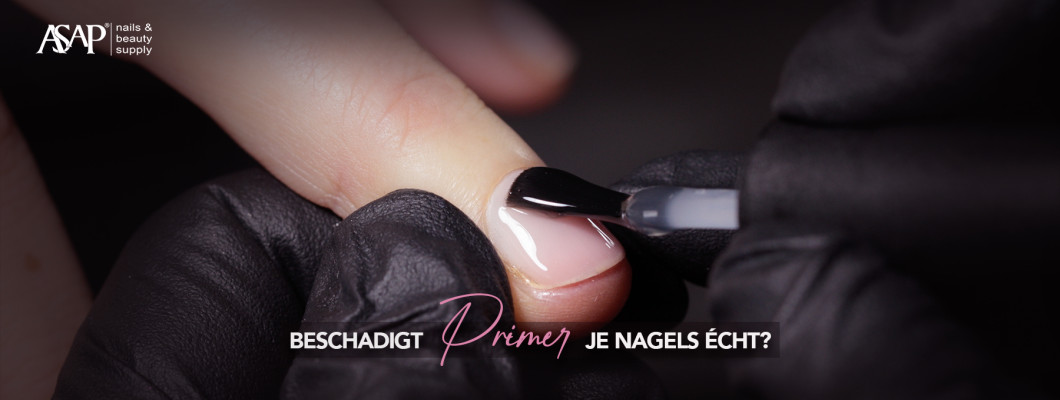
Zure primer maakt gaatjes in de nagel… of toch niet?
Binnen de nagelbranche doen soms hardnekkige misverstanden de ronde. Eén daarvan is de stelling dat een zure primer “gaatjes” in de nagel zou maken. Een uitspraak die vaak wordt herhaald, maar zelden correct wordt uitgelegd.
Het probleem? Slechte techniek wordt te vaak verward met productkennis. Laten we daarom even teruggaan naar de feiten.
Wat doet een zure primer écht?
Een zure primer (methacrylzuur) heeft een duidelijke en functionele rol binnen de nagelbehandeling.
Het product:
- ontvet de nagelplaat
- verwijdert tijdelijk vocht van de nagelplaat
- verhoogt de oppervlakte-energie
- verbetert de hechting van het product
Dat is alles.
Er is geen sprake van magie, maar ook niet van schade (gaatjes) zoals vaak wordt beweerd.
Waar komt het misverstand vandaan?
Wat veel mensen zien na het gebruik van een primer, is:
- een witte, doffe en uitgedroogde nagel
- een licht ruwe structuur
Deze effecten worden vaak verkeerd geïnterpreteerd als “beschadiging” van de nagel.
Maar in werkelijkheid zijn dit visuele kenmerken van:
- dehydratie van de nagelplaat
- en/of micro-ruwheid door vijlen
Het is dus niet de primer die schade veroorzaakt.
De echte oorzaken van nagelschade
Wanneer er daadwerkelijk schade optreedt, ligt de oorzaak meestal elders:
- overvijlen van de natuurlijke nagel
- een slechte of onjuiste voorbereiding (prep)
- onvoldoende opleiding of kennis
Het is belangrijk om oorzaak en gevolg correct te onderscheiden. Een product krijgt vaak de schuld, terwijl de techniek de echte boosdoener is.
Wat zegt de regelgeving?
Als een zure primer daadwerkelijk “gaatjes” in de nagel zou veroorzaken, dan zou dit binnen Europa niet onopgemerkt blijven.
In dat geval zouden we al lang te maken hebben met:
- een verbod op het ingrediënt
- massale klachten
- medische dossiers en meldingen
Dit is niet het geval.
Marketing versus realiteit
Binnen de sector wordt vaak gespeeld met termen zoals:
- "acid-free is gezonder”
- “zuur is agressief”
- “dit product is veiliger"
Hoewel dit commercieel sterk klinkt, is het geen wetenschappelijke onderbouwing.
Zowel een zure primer als een acid-free primer zijn simpelweg tools.
Het echte verschil
Het verschil zit niet in goed of slecht, maar in:
- wanneer je het product gebruikt
- hoe je het toepast
- en of je begrijpt wat je doet
Een ervaren nagelstyliste weet wanneer een zure primer nodig is en wanneer een acid-free alternatief beter past.
Conclusie
Een zure primer maakt geen gaten in de nagel.
Onjuiste technieken wel.
Dat is misschien confronterend, maar het is wel de realiteit.
Leave a Comment